
Growing your own fruit is one of the most rewarding aspects of gardening. From crisp apples in autumn to juicy plums and sweet cherries in summer, fruit trees provide not only a delicious harvest but also structure, seasonal interest and beautiful spring blossom. With the right choice of varieties and a little planning, fruit trees can thrive in gardens across Ireland, whether planted as part of a traditional orchard or incorporated into smaller garden spaces.
Why plant fruit trees?
Fruit trees offer far more than just produce. They support pollinators when in blossom, contribute to biodiversity, and can become long-lived features in the garden. Many varieties are also well suited to Irish conditions, making them a reliable and worthwhile investment.
Planting Fruit Trees — A General Guide
While different fruit trees have slightly different requirements, the basics of planting are largely the same.
When to plant: Bare-root trees are best planted between November and March, while container-grown trees can be planted year-round, avoiding extreme weather conditions.
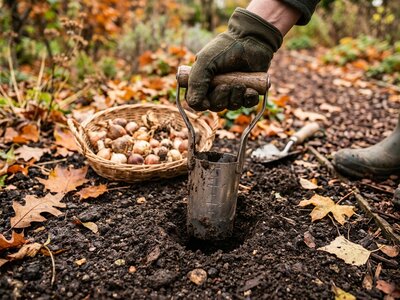
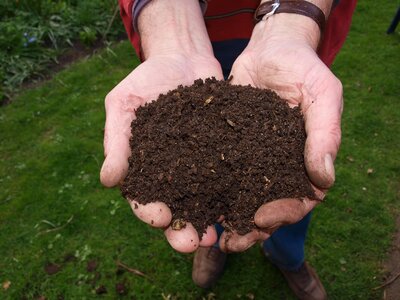
How to plant: Dig a hole twice the width of the root-ball and loosen the soil at the base. It is usually advised that you incorporate compost or well-rotted organic matter to the space prior to planting but there is some debate over this is to whether it makes it too easy for the roots of the tree, and whether it is best just to backfill with the existing soil so that your tree adjusts to its new subterranean environment and becomes more resilient. At the very least it is important not to just fill the whole with compost, especially in heavier soils and this will have two ill effects: the compost will be too loose and make the tree more unstable and; the roots will tend to grow just within the compost, treating the heavy soil around almost like a container in which the tree can become root-bound. If you are going to add compost or well-rotted manure to feed your tree, this is probably best applied as a mulch on the surface after planting, being sure to leave some space free around the tree stem itself to avoid any potential rot.
Once you have dug your hole, position the tree so that the graft union sits just above soil level, this will appear as a kind of knuckle at the base of the tree. For trees bought in containers, this will mean just planting at the same level the tree was at in the pot.
Firm the soil gently, water thoroughly and stake young trees to prevent wind rock — particularly important in exposed areas in the West of Ireland.
Then apply your mulch around the base to retain moisture and suppress weeds, keeping it clear of the trunk.
Tip: One addition that will benefit your tree when planting is Mycorrhizal fungi. These fungi work by helping the roots to take up nutrients more efficiently. To apply simply mix the mycorrhizal fungi into the planting hole and sprinkle onto the plant roots to ensure immediate contact.
Popular Fruit Trees for Irish Gardens
Apples (Malus)
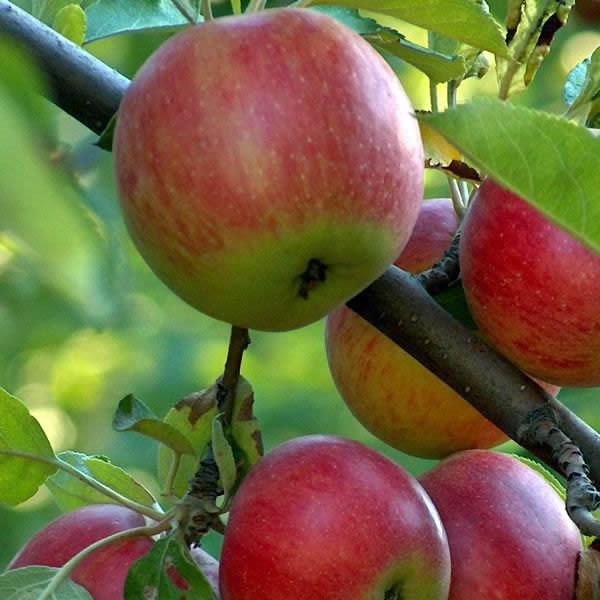
Apples are among the easiest and most reliable fruit trees to grow in Ireland, making them an excellent choice for beginners and experienced gardeners alike. They produce reliable crops and beautiful spring blossom.
Recommended varieties
- Discovery - a dessert apple with a compact habit that provides fruit early in the season. Great for eating from the tree and using early on as doesn't store that well.
- Howgate Wonder - A large, late season, heavy cropping culinary apple that has mild flavour and is often regarded as dual purpose.
- Egremont Russet - This russet apple tree produces good, regular crops of dessert apple and is suitable for colder, wetter areas (like here in the west of Ireland!)
Best conditions: Full sun, well-drained soil, sheltered from strong winds.
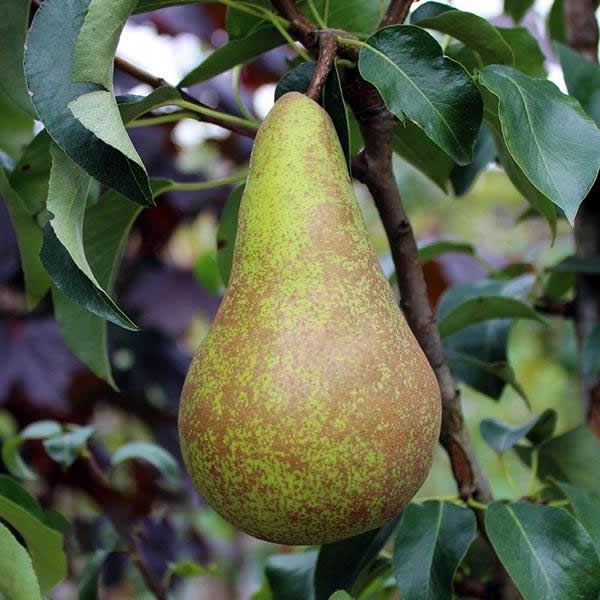
Pears (Pyrus)
Pears offer sweet, juicy fruit but benefit from a slightly warmer and more sheltered position than apples. Ideal for training against a wall in Irish gardens.
Recommended varieties
- Concorde - Compact dessert pear tree with white flowers in spring followed by fruit for use between October and November.
- Clapp's Favourite - Tasty, early-season dessert pear best eaten from the tree on the day it is harvested
Best conditions: Sunny, sheltered location with fertile, well-drained soil.
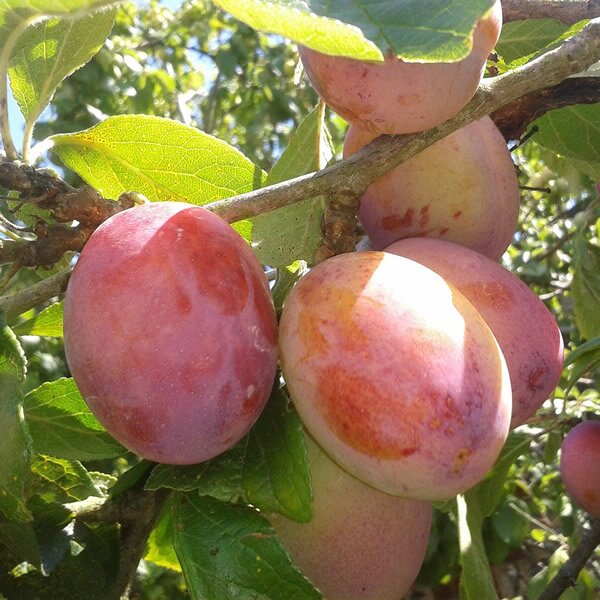
Plums & Damsons (Prunus domestica)
Reliable and productive, plums and damsons are well suited to Irish conditions and often fruit generously even in less sheltered gardens.
Recommended varieties
- Victoria - popular, self-fertile, very heavy cropper suitable as a dessert plum and for culinary use.
- Opal - a reliably fruiting, dessert gage that flowers white in early spring, with green fruits that turn pinkish-purple as they ripen
- Reine Claude Verte - Partially self fertile 'greengage' plum that produces rounded, yellow-green, sweet, juicy fruit with good flavour.
- Damson - Good cropper mainly used for culinary use.
Best conditions: Sunny position with good drainage.
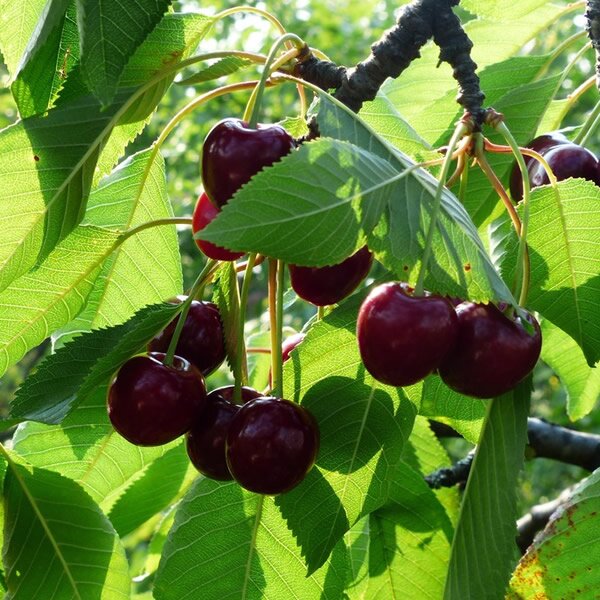
Cherries (Prunus avium)
Cherries thrive in warm, sheltered gardens and are perfect for smaller spaces when grown on dwarf rootstocks or trained against walls.
Recommended varieties
- Stella - black cherry with large, rich, high quality fruits. considered self-fertile but more productive with a pollinating partner.
- Piemont - self-fertile cherry tree with dual use, sweet, yet tangy fruit that can be eaten directly from the tree or used for jam and desserts.
Best conditions: Warm, sheltered, sunny position.
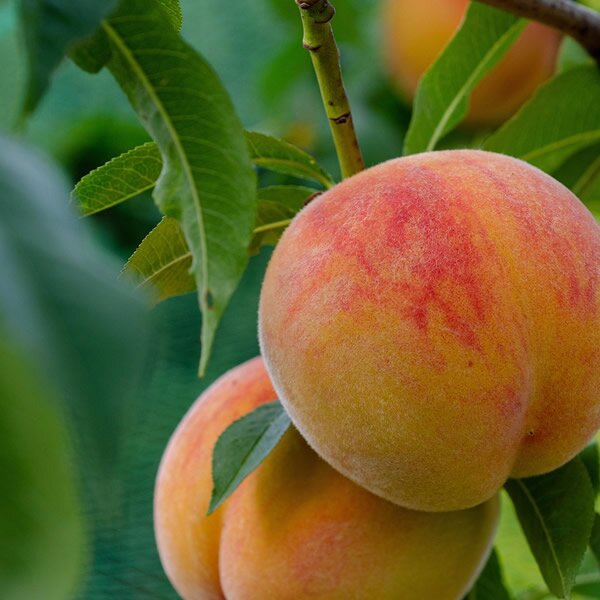
Peach (Prunus persica)
Peaches can be a bit tricky in our climate and are best planted in a sunny, sheltered spot, ideally trained against a warm wall. In Ireland it is probably best to opt for a dwarf peach that you can grow in a container. Varieties specifically bred for container growing are often sold as ‘patio peaches’, reaching only about 1.8m (6ft) tall and needing little pruning. These can be located in a sheltered position where spring-frosts are unlikely and then relocated to an unheated greenhouse or polytunnel over winter or even grown in a greenhouse or tunnel throughout the year. Peaches are self-fertile but as they flower early in the season when fewer pollinators may be around it is often best to hand pollinate for best results.
Recommended Varieties
- Patio Peach ' Bonanza' - self-fertile 'pygmy' peach is perfect for growing on a sunny patio, balcony or greenhouse in a container.
Best conditions: Somewhere sheltered in full sun.
Quick Comparison — Choosing the Right Fruit Tree
| Fruit Type | Ease of Growing | Pollination Needs | Best For |
|---|---|---|---|
| Apples | Easy | Usually needs partner | Beginners, reliable crops |
| Pears | Moderate | Needs partner | Sheltered gardens |
| Plums | Easy | Often self-fertile | Low-maintenance growing |
| Cherries | Moderate | Some self-fertile | Small gardens, trained trees |
| Peach | Moderate - Difficult | Self-fertile | Sunny, sheltered gardens, courtyards and patios. |
Tree Sizes and Pollination Groups
Fruit trees are grafted onto rootstocks that control their final size. These range from dwarf trees suitable for containers to larger orchard trees.
Pollination: Many fruit trees require a compatible partner to produce fruit. Apples, in particular, are divided into pollination groups based on flowering time. Choosing varieties from the same or neighbouring groups ensures successful pollination.
Some varieties are self-fertile, making them ideal for smaller gardens.
Pollination Explained
Pollination is one of the most important factors in successfully growing fruit trees, and it’s often where gardeners feel unsure. Fortunately, once you understand the basics, it’s quite straightforward.
What is pollination?
Most fruit trees need pollen from another compatible tree to produce fruit. This pollen is usually transferred by bees and other pollinating insects when trees are in blossom.
Pollination Groups
Fruit trees — particularly apples — are divided into pollination groups based on when they flower. For successful pollination, choose trees from the same group or a neighbouring group so they are in flower at the same time.
- Example: A Group 2 apple will successfully pollinate with Group 1, 2 or 3.
Self-Fertile vs Pollination Partners
- Self-fertile trees: These can produce fruit on their own, making them ideal for smaller gardens. Examples include some plums and cherries. Even with some self-fertile trees however, you can often increase yields and get better results with a pollination partner nearby.
- Pollination-dependent trees: Require another compatible tree to produce fruit — most apples fall into this category and some like 'Jonagold' are triploids that require 2 different pollinating partners for fruit production.
Don’t have space for two trees?
Even if you only plant one tree, pollination can still occur if there are compatible trees growing nearby in neighbouring gardens. Alternatively, consider:
- Planting a self-fertile variety
- Choosing a family or multi-grafted tree - this is where 2 or more varieties of fruit tree have been grafted onto one rootstock, enabling pollination and providing you with 2 or more fruit types when it cokes to harvesting.
- You might also consider 'step-over' trees or espaliers. 'Step overs' are where a fruit tree has been grown in such a way that two branches have been trained to grow horizontally at a low height and often multiple trees cultivated in such a way are strung together to form kind-of low hedge which you can literally step over. 'Espalier' are trained in a similar way but with multiple horizontal branches trained from a taller vertical main-stem, perfect for growing against a wall or even used to divide the garden.
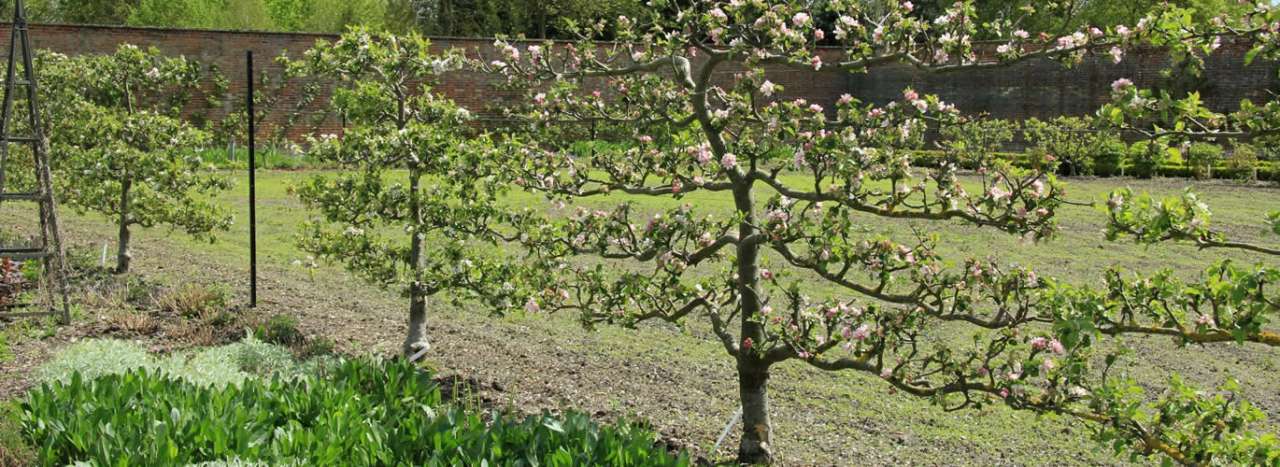
Above we can see an example of espaliered fruit trees. A step-over would be similar but the height of the tree would stop at the first two horizontal branches. Photo by Karen Roe (CC BY-SA 2.0)
Top tip: Good pollination depends on insect activity — planting pollinator-friendly flowers near your fruit trees can significantly improve your harvest. You may also consider creating a permaculture 'fruit guild' with your fruit tree as the 'keystone' plant (see 'Creating a permaculture guild')
Ongoing Care and Maintenance
- Watering: Keep young trees well watered during dry periods.
- Feeding: Apply a balanced fertiliser in spring.
- Pruning: Prune annually to maintain shape, remove dead wood and encourage fruiting. (You may also be interested in 'How to prune trees & shrubs - a seasonal guide')
- Mulching: Maintain a mulch layer to conserve moisture and suppress weeds.
- Protection: Protect blossoms from late frosts where possible and guard fruit from birds if necessary.
Final Thoughts
Planting fruit trees is an investment in the future of your garden. With the right varieties and a little care, they will reward you with blossom in spring, fruit in autumn and years of enjoyment. Whether you have space for a single tree or a small orchard, growing your own fruit is a satisfying and sustainable choice for Irish gardens.
Thinking of planting fruit trees?
Visit our garden centres in Boyle and Roscommon or browse our range online to find the perfect varieties for your garden.